


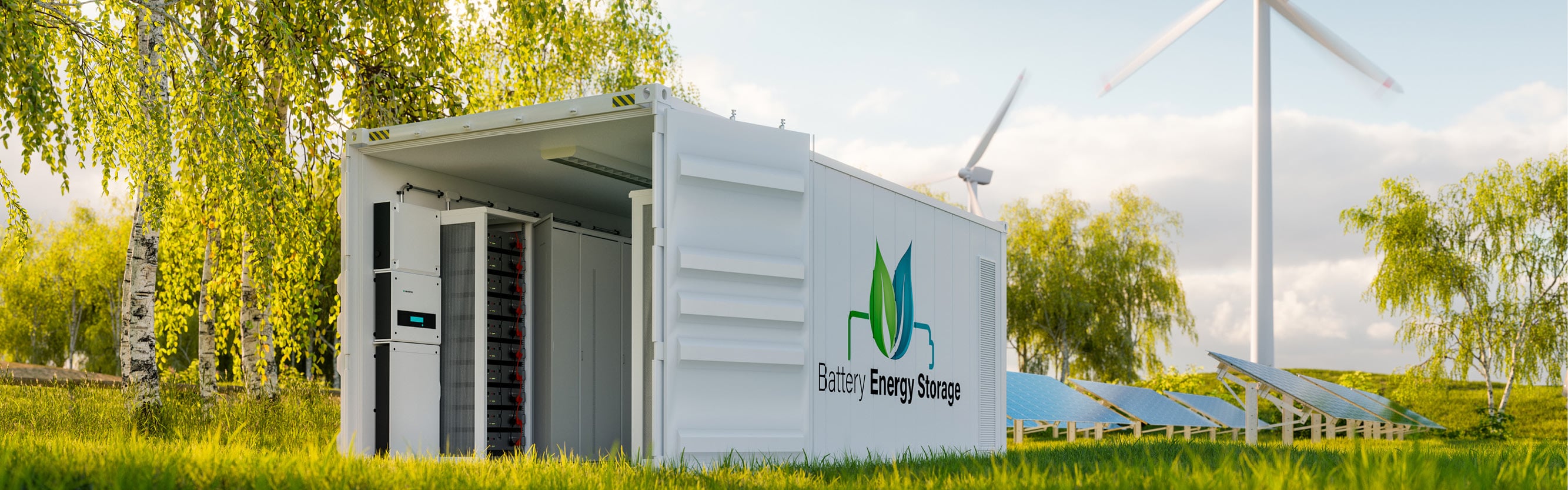
Battery systems have become an integral part of future energy solutions
The Battery Energy Storage System (BESS) is rapidly becoming an integral part of renewable energy. While the focus a few years ago was primarily on establishing production capacity, today it has shifted toward balancing the energy system and ensuring return on investment. Cable selection and technical awareness also play a significant role in the profitability of a project.
According to Raigo Viltrop, Product Manager of the Construction Segment at Prysmian Baltics, the goal of BESS is to level out energy consumption and generate profit. "Over the last five years, battery prices have dropped significantly, and today it no longer makes sense just to build solar or wind farms exclusively; a capable battery bank must go hand in hand with them. BESS allows for the storage of excess energy and its use at a time when its value is higher, making the entire energy system more stable and efficient."
This is confirmed by Andero Hännikäinen, Sales Manager of the Industrial Segment at Prysmian Group Baltics AS, who believes that merely building production capacity is no longer economically viable. "Under current market conditions and national measures, building a solar farm is often not profitable. When the electricity price is negative during peak production hours, the producer has to pay extra. The solution is a battery bank, which allows energy to be stored and used when the price is economically viable."
BESS is part of a broader energy infrastructure that encompasses production and storage, as well as grid connections. Prysmian offers comprehensive solutions in this value chain, from low voltage to high voltage. Viltrop stresses the importance of a systematic approach: "We have the entire product range needed to connect battery parks with wind and solar farms and power grids. This includes low, medium, and high voltage cables, as well as all necessary accessories from sleeves to fastenings."
According to him, cost efficiency is very important in projects, and he highlights the use of aluminium cables as one option. "If the system allows it, aluminium cables can be used instead of copper cables, which makes the project significantly more affordable. This provides the builder with significant savings while maintaining reliability.
There are also various nuances involved in cable connection that are not always taken into account. For example, solar cables compliant with the EN 50618 standard are often used between the inverter and the batteries, but in practice, this is not always necessary. Instead, technically suitable alternatives can be used, such as NSGAFÖU or RZ1-K fine-stranded copper cables, which are more affordable but still very flexible, and suitable for fitting into tight spaces. It should also be noted that the maximum permitted voltages for cables are higher for direct current than for alternating current.
Hännikäinen and Viltrop state that Prysmian's approach is not limited merely to supplying products, as it is important to involve the company in the early design phase to avoid problems later on. "There is no need to reinvent the wheel: by consulting with us regarding cable solutions right in the initial phase, optimal solutions can be selected, and all components from cables to fastenings and connections can be thought through. The result is a comprehensive and reliable system that avoids unjustifiable expenses arising from a lack of expertise."
In addition to classic cable solutions, Prysmian offers smart monitoring and management tools. EoSS (Electrical and Optical Sensing Solutions) allows cable networks to be monitored in real time and potential faults to be detected at an early stage. Portable devices, such as the PRY-CAM Portable, help to quickly assess the condition of the insulation and prevent unexpected outages. For use during the construction phase is the Alesea asset management system, which enables real-time tracking of the location, usage, environmental conditions, and inventory of cable drums, helping to optimise work processes and reduce losses. For example, if there are numerous cables on site, Alesea provides an overview of when more should be delivered and when empty drums should be taken away. This way, the progress of the site can be monitored operationally, and usage of the site's storage area can be optimised.
There is no energy transition without sustainability
BESS technologies and the development of renewable energy are inseparably linked to sustainability goals, but the environmental impact of the solutions used is equally important. Prysmian treats sustainability as a strategic pillar, integrating it into both product development and everyday operations. The company uses recycled materials in many of its solutions, including plastic, aluminium, and copper, and is constantly developing new technologies that reduce the environmental footprint of energy systems.
"Innovation and sustainability are our two strategic pillars and an integral part of our DNA," says Viltrop. "For Prysmian, sustainability means a commitment to future generations and, to this end, new designs, materials, and processes are constantly being developed. These innovations support the energy transition, reduce the environmental impact of the solutions, and enable cleaner and more efficient energy systems."
Prysmian's experience and comprehensive solutions help designers and developers create optimised, reliable, and sustainable energy solutions, and streamline the construction of BESS installations. Early collaboration and a conscious choice regarding technical solutions are key factors that determine both the economic success of a project and its contribution to a future-proof energy system.
The cable selection for BESS solutions can be found HERE.
Article from elektriala.ee